
One area that consistently poses challenges and raises concerns for US companies is sales tax compliance. It’s no surprise that navigating sales tax can be a daunting task. With ever-changing tax laws, complex regulations, and varying rates across different jurisdictions. However, mastering sales tax compliance is crucial to avoid potential audits that could lead to severe penalties and reputational damage. In this article, we will explore essential strategies that US companies can adopt to prevent sales tax audits and ensure smooth compliance.
Understanding Sales Tax Compliance
It’s crucial to understand the principles of sales tax compliance before diving into the tactics. A consumption tax known as sales tax is levied at the state and local levels on the purchase of goods and services. Businesses are in charge of gathering and sending sales tax to the proper taxing bodies. From state to state, county to county, and even city to city, the tax laws and rates might differ greatly. Compliance is difficult due to its intricacy, particularly for businesses involved in interstate commerce.
Importance of Preventing Sales Tax Audits
Sales tax audits are conducted by state and local tax authorities to ensure businesses are accurately collecting and remitting the correct amount of sales tax. An audit can be a time-consuming and costly process, often resulting in financial penalties, interest charges, and potential legal ramifications if non-compliance is discovered. There are different types of audits like sales tax audits, Workers Comp Audit, etc. Besides the financial burden, audits can also divert valuable resources and negatively impact a company’s reputation, leading to a loss of customer trust and loyalty.
Strategies to Master Sales Tax Compliance
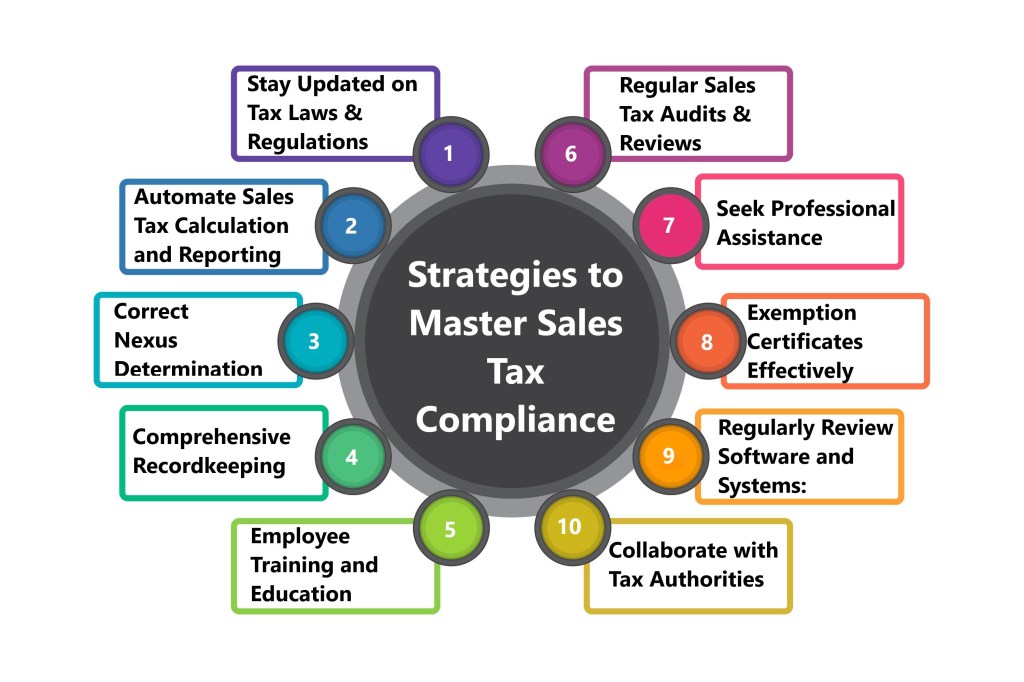
1. Stay Updated on Tax Laws and Regulations:
The first step in mastering sales tax compliance is to stay informed about changes in tax laws, rules, and rates. Tax laws are subject to frequent amendments, and staying abreast of these changes is crucial to ensure accurate and up-to-date compliance. Companies should establish a dedicated team or seek professional assistance to monitor tax updates and assess their impact on their business operations.
2. Automate Sales Tax Calculation and Reporting:
Manual calculations and record-keeping increase the risk of errors and inaccuracies in sales tax compliance. Adopting automated sales tax software can streamline the process of calculating, collecting, and reporting taxes. This technology can integrate with e-commerce platforms, point-of-sale systems, and enterprise resource planning (ERP) software, ensuring real-time tax rate updates and accurate reporting.
3. Correct Nexus Determination:
Nexus is the phrase used to describe the existence of enough commercial activity in a state to result in the requirement to collect and remit sales tax. Following the Supreme Court’s decision in South Dakota v. Wayfair (2018), states may now levy sales taxes on companies that have economic nexus with their jurisdictions even if they do not have a physical presence there. US companies must accurately determine their nexus obligations and register for sales tax in each relevant jurisdiction.
4. Comprehensive Recordkeeping:
Keeping meticulous, well-organized records is essential for complying with sales tax laws. Records should include all sales transactions, exemption certificates, and supporting documentation for deductions or credits. In the event of an audit, comprehensive records can substantiate compliance efforts and demonstrate a good-faith effort to comply with tax laws.
5. Employee Training and Education:
Ensure that employees involved in sales, finance, and compliance are well-informed about sales tax regulations and their responsibilities. Providing regular training and education on sales tax compliance can help prevent unintentional errors and foster a culture of compliance within the organization.
6. Regular Sales Tax Audits and Reviews:
Conducting internal sales tax audits and reviews at regular intervals can help identify potential compliance issues and rectify them proactively. These self-audits can be an opportunity to assess internal processes, improve accuracy, and address any areas of concern before they come to the attention of tax authorities.
7. Seek Professional Assistance:
Sales tax compliance can be complex, especially for growing businesses with operations in multiple states. Engaging tax experts or consultants who are knowledgeable about sales tax can offer helpful direction and aid in navigating the complexities of compliance.
8. Utilize Exemption Certificates Effectively:
For businesses making exempt sales, obtaining and maintaining valid exemption certificates is crucial. These certificates provide evidence that a sale is not subject to sales tax. Implementing a system to validate and store exemption certificates can prevent errors and potential audits related to exempt sales.
9. Regularly Review Software and Systems:
As businesses grow and adapt to changing market conditions, their sales tax software and systems must keep pace. Regularly review and update software to ensure it remains compliant with current tax laws. They accurately calculate taxes for the relevant jurisdictions.
10. Collaborate with Tax Authorities:
In some cases, open communication with tax authorities can be beneficial. Some states offer voluntary disclosure programs. They allow businesses to come forward and correct past sales tax errors without severe penalties. Proactively engaging with tax authorities can demonstrate a commitment to compliance. They may result in more favorable treatment during an audit.
Conclusion
In conclusion, mastering sales tax compliance is a critical aspect of running a successful business in the United States. By understanding the nuances of sales tax laws, and maintaining accurate records, companies can significantly reduce the risk of audits and penalties. Additionally, seeking professional advice, conducting regular internal audits, and fostering a culture of compliance will go a long way in ensuring smooth operations and maintaining a positive reputation. Embracing these strategies will not only prevent audits but also contribute to the overall growth and success of US companies in an increasingly complex regulatory environment.



 Tax and License
Leave a comment